Today we completed our final political play performances. Our production was still quite raw with strong ideas that needed to be work-shopped further, nevertheless we managed to pull off an insightful and at moments poignant piece about state sanction torture and certainly got the audience thinking. In this evaluation the key areas I will be focusing are; The artistic achievements we made; the level of professional execution; strengths and weaknesses and the future potential of the piece as a theatre product. This term has been a really big learning curb about the power as theatre as a tool for change and how to make an audience really watch the play, deeper messages and all.
The motif of Snow White and the Seven Dwarves was really effective on the night. They provided a brilliant element of spass and cause the audience to question their laughter. As the audience came in they were greeted by these weird clown figures dressed all in white. This straight away applies the verfremdungseffekt as they step into a room and are already being interacted with. I felt like this was effective because it instantly set up tense atmosphere and made them start asking question. Another way in which alienated the audience as they came in was with the "Barney song". This was another Brechtian technique we applied (song). This was enhanced by adding gesture and blank facial expressions. The fact we were standing behind the audience and they had no choice but to sit in front of us. I feel like this was a representation of the dark, looming, ever-present torturer figure.
This would have put the audience right into the victims shoe's. The theatrical configuration (traverse) help to add another element that made the audience feel on edge. They could always see other audience members and the ensemble. This would have made them feel very aware that they were sitting in a theatre; it would also make them conscious of their own reactions instead of being lost in the narrative. Also because it was a small audience there was a sense of hyper awareness of everyone around them. I feel like this was a positive and a negative because they felt like they couldn't laugh. Most of the funny parts were met with half-assured laughter which meant that they felt the subject material was too dark to laugh at which was one of our main aims.
I feel like we executed the performance with a high level of professionalism and commitment. For a lot of us the piece was a bit of an endurance test. My section wasn't until right at the end which meant I had to stand for about 45 minutes moving a minimal amount and keeping that "I've been lobotomised"essence going for the entire duration. This was made even harder by the feeling that an audience member could look at you at moment. Some feedback I got from one of them was that most of us seem to just stare at one spot for the whole piece which was really effective and maintain that atmosphere. However not everyone could keep this focus. I feel like this could be solved by having a moment when the ensemble changed sides and look at the audience; this would also apply the V effect and give us an opportunity to stretch our legs. Another example of where we showed excellent professionalism was when the tech went wrong. The video didn't play on cue for the "I'm in Guantanamo get me out of here". There was a long pause but after a little wait the action continued regardless and they managed to re-work it without causing too much disruption to the audience. It was great to always find new things in a performance. I found myself looking at the back of the person's head in front of me. I thought this was effect because it would make the audience on the other side think they are being watched.
Our biggest strength was our acting and our aesthetic approach. I spoke to one of the audience members (Mr. Worden) and he said that the play really got under his skin. He was later on watching a music show but he was still thinking about the piece in the back of his mind. I think our application of Brecht's techniques was very strong however I feel like I could have used the V effect more. When I leant back on my chair and said "We're all in this together, you see". I made eye contact for a brief second with a few audience members but that was it. I could've improved this by physically pointing and getting in their faces. A weakness of our production was the fact we didn't provide a solution to our message. We presented our problem but we didn't solve it. In order to improve this aspect of the piece I would add petitions as the audience leaves or even during the performance. That would really bring that out of the narrative. Sharply.
As a theatre product I feel this piece has a lot of potential. With a bigger audience the jokes would resonate more, a higher budget we could have higher quality projections and a bigger cast we could add more ensemble spass scenes. I think this piece would be suited in a Fringe theatre like the cockpit. The intimate space would mean that the alienation and creepy atmosphere would remain but our message would reach a wider audience. We could even transfer it to a non-theatrical space like a train station waiting room. I think that the simplistic set would mean that the piece could be profitable and we could donate the proceeds to amnesty international.
In conclusion, our political piece was a success as we managed to do the hardest thing within theatre; get the audience think about the issue even after they left.
Wednesday, 9 December 2015

Tuesday, 8 December 2015
Make-up for Political piece

I covered my eyes with dark black paint and had white and black arrows pointing towards them. This was to represent how my character had "seen a lot of things". It was also a way of "hypnotising" the audience and other characters into looking into my eyes. A lot of torture is physiological and the dark patches could be interpreted as sleep deprivation. This was another way in the piece we applied the V effect.
Sunday, 6 December 2015
SINGIN' IN THE RAIN Song Lyrics
I'm singing in the rain
Just singing in the rain
What a glorious feelin'
I'm happy again
I'm laughing at clouds
So dark up above
The sun's in my heart
And I'm ready for love
Let the stormy clouds chase
Everyone from the place
Come on with the rain
I've a smile on my face
I walk down the lane
With a happy refrain
Just singin',
Singin' in the rain
Dancin' in the rain
Dee-ah dee-ah dee-ah
Dee-ah dee-ah dee-ah
I'm happy again!
I'm singin' and dancin' in the rain!
Tuesday, 1 December 2015
Notes from Director
Be on the cues - in order to make the scene more sharp and comedic we must come in with our lines a tiny bit before the last person speaks; however we must not speed up or interrupt each others lines. This is difficult because it's hard not to rush your lines when your trying to hop on your cues. I need to make sure I know my lines inside out in order to prepare for vocal production.
"It's the act of animal, that" - I need to borrow speech patterns from northern dialect in order to say the line right.
I have to find the balance between professionalism and concern within my character. I can do this by analysing how adults respond when confronted by a crying child that isn't their own.
Sunday, 29 November 2015
Spass
Spass literally translates from German to English as "fun". Brecht realised that whilst an audience laughs they are also thinking. Brechtian Theatre isn't all serious, comedy is integral part of engaging an audience and delivering an important messages. Spass was also a good tension breaker, if the tension got too high then the audience might start following the emotional journey of a character. Types of Spass include; stand up routines, song, slapstick, physical comedy, or even a game. It isn't just purposeless silliness however, there was a strong message behind the comedy. This is because it is used to treat a serious subject. It's all about making the audience question why the actually laughed. They start examining their own views and whether they should laugh or not.
For example:

For example:

This joke highlights disability through clever word play. Brecht might have used a joke like this if he was making a comment on the way we treat amputees. I feel like everyone has a sense of dark humour even if they won't admit to it, so spass is another effective means on holding a mirror up to the audience.
Exercise: Servants and masters - We played a game in which 5 or so people were masters and the rest of us were servants, what the master demanded we had to supply not matter what it was, if they needed a seat you became a seat, if they wanted some water we had to get it as soon as possible. If they didn't get what they wanted the game was over. From an outside perspective this might have seen funny and could've been a social commentary on the bourgeoisie lifestyle and the way the proletariat obey every command even though they are the majority. However playing it wasn't very fun to be honest and I don't feel like this exercise helped to demonstrate an effective use of Spass.
Gestus
Gestus is another Brechtian technique; it is a distinctive movement or gesture that highlights a particular moment of significance or an attitude in relation to theme that is trying to be conveyed. It does this however without delving into emotion or showing a character's deep psychological reaction to something. This was another way to showcase an issue with putting the audience catharsis. Brecht didn't want the actors to play characters but rather show them as a type of person. You would see him name his characters archetypal things like "The Girl" or "The Soldier". If the audience began thinking about the emotional reasoning behind the actions then he would have failed; he wished them to make judgements on the societal situation rather than empathising with them. Gestus must have social comment paired with it. For example, a soldier saluting as he marches across a stage is a normal gesture. However if he was saluting as he marched over a stage filled with dead bodies, it would be Gestus as a social comment about the type of person he represents.


Exercise:In this exercise we were put into groups of three and told to show three freeze frames showing;
- Soldiers confronting each other in battle
- Soldiers finding a dead body
- Soldiers attitude to the dead body
We realised that the exercises was all about the third freeze frame, so we decided to depict the two different reactions, One soldier stepping over the body (not caring at all) and one soldier looking away like it didn't happen. We were making a comment on the way soldiers are willing to step over the enemy and have no remorse. We also have the other kind of soldier, who will look away from the harm done and the destruction of human life. This exercise was effective, because it helped us find ways to portray societal attitudes through strong gestures and communicate important themes without using words.


Uta Hagen 9 Question - Things make no sense
Who am I? My name is Detective Inspector Benjamin Brentwood, Code name B; I graduated Northumbria university with a first in criminology. I have worked for Scotland Yard for ten years and arrested over 100 felons for crimes ranging from petty theft to terrorist activity. I do not discriminate and I am not afraid to charge even children or old people. I am 42 years old, I have a wife and 2 beautiful daughters and I wish to keep the world safe for them.
What time is it? The year is 2098, Crime rates in the last century quadruple, widespread lawlessness and looting led to social/governmental reform. We now live under a more "totalitarian" regime but it keeps us safe, it all hinges on justice and punishment keeping Britain's subjects in order. It is a Tuesday, 8:30pm, it's been a long day.
Where am I? I am in a tiny room, slightly claustrophobic, a singular light bulb illuminates a small medium size desk and not much else, there's two way glass to my left, and small recording device concealed underneath my chair, there's a metal door behind the suspect slightly to the left with a double lock on it. There is also an out of use water-cooler behind me with a filing cabinet next to it.
What surrounds me? In front of me sits my suspect, Georgina Graeber, accused of murder in second degree outside an electronics shop, She seems unaware of the allegations but that doesn't throw me, My partner sits to my right, Angela Anderson; code name A, she's been in the business nearly as long as I have, however she has a tendency to get a little passionate about her work.
What is my relationship to the things around me? Georgina is my naive suspect of my current investigation, she has no idea that she is actually the one standing accused of the crime; she probably considers herself a good law abiding citizen little does she know, A (my partner) is my scribe, bad cop to my good cop and my secondary in this enquiry.
What's just happened? I just tied up the case of the Zodiac Killer, turned out to be coat hanger from Slough! Who knew? I got my assistant Tina to send my paperwork down to Human Resources for approval and to send up my next suspect for questioning.
What do I want? I want Georgina to confess to the crime, I want her to stop interrupting my partner, I want to forget the horrible images that plague my mind, I want to rid the world of unsolved crime, I want to her to see that this is the only way the system to can hold up.
What's in my way? Her perceptions of her own innocence, the fact she was in Sweden selling bottled water, the tedious process, My job and desires to do this job and a strong memory,
What am I going do to get what I want? Simply fabricate her whereabouts, right down a false report, show her some disturbing imagery, convince her that this is the only way the world can work, show that she isn't the only one.
What time is it? The year is 2098, Crime rates in the last century quadruple, widespread lawlessness and looting led to social/governmental reform. We now live under a more "totalitarian" regime but it keeps us safe, it all hinges on justice and punishment keeping Britain's subjects in order. It is a Tuesday, 8:30pm, it's been a long day.
Where am I? I am in a tiny room, slightly claustrophobic, a singular light bulb illuminates a small medium size desk and not much else, there's two way glass to my left, and small recording device concealed underneath my chair, there's a metal door behind the suspect slightly to the left with a double lock on it. There is also an out of use water-cooler behind me with a filing cabinet next to it.
What surrounds me? In front of me sits my suspect, Georgina Graeber, accused of murder in second degree outside an electronics shop, She seems unaware of the allegations but that doesn't throw me, My partner sits to my right, Angela Anderson; code name A, she's been in the business nearly as long as I have, however she has a tendency to get a little passionate about her work.
What is my relationship to the things around me? Georgina is my naive suspect of my current investigation, she has no idea that she is actually the one standing accused of the crime; she probably considers herself a good law abiding citizen little does she know, A (my partner) is my scribe, bad cop to my good cop and my secondary in this enquiry.
What's just happened? I just tied up the case of the Zodiac Killer, turned out to be coat hanger from Slough! Who knew? I got my assistant Tina to send my paperwork down to Human Resources for approval and to send up my next suspect for questioning.
What do I want? I want Georgina to confess to the crime, I want her to stop interrupting my partner, I want to forget the horrible images that plague my mind, I want to rid the world of unsolved crime, I want to her to see that this is the only way the system to can hold up.
What's in my way? Her perceptions of her own innocence, the fact she was in Sweden selling bottled water, the tedious process, My job and desires to do this job and a strong memory,
What am I going do to get what I want? Simply fabricate her whereabouts, right down a false report, show her some disturbing imagery, convince her that this is the only way the world can work, show that she isn't the only one.
Saturday, 28 November 2015
Ideas for ensemble scenes
*I was not in the ensemble devising sections and all notes about this part of the production are courtesy of Chloe Harris
Today in theatre we got the parts for the play in the end of term. My part was part of the ensemble which I am really excited about as we have to come up with ideas related to Brecht's techniques. The ideas we came up with were: Electric chair and standing:
Actor in an electric chair and is being shocked. the audience will have to stand up to save them. If one of the audience member sits down the actor gets shocked.
Forced Drugs:
make audience take a pill that's actually a sweet. then wait about 30 seconds to have a blackout. Then trick the audience into making them think they are hallucinating by using projections ,smoke machine , optical illusions, bugs , images and high pitch sounds.
Singing in the Rain:
Sing singing in the rain under an umbrella with water dripping in the back ground. We could have Reece in drag with a spotlight on him.
Shouting:
A tape of someone shouting funny threatening comments. the ideas we have for this is:
- I'm gonna make you keep the itchy label in your jumper till you scratch your skin.
- I'm gonna make you a cup of tea and wait for it to cool down and make you drink it.
-I'm going to hide the TV remote and leave it on the shopping channel.
Tickling:
We could make someone sit in an torture chair and tickle them to 'death'.
Today in theatre we got the parts for the play in the end of term. My part was part of the ensemble which I am really excited about as we have to come up with ideas related to Brecht's techniques. The ideas we came up with were: Electric chair and standing:
Actor in an electric chair and is being shocked. the audience will have to stand up to save them. If one of the audience member sits down the actor gets shocked.
Forced Drugs:
make audience take a pill that's actually a sweet. then wait about 30 seconds to have a blackout. Then trick the audience into making them think they are hallucinating by using projections ,smoke machine , optical illusions, bugs , images and high pitch sounds.
Singing in the Rain:
Sing singing in the rain under an umbrella with water dripping in the back ground. We could have Reece in drag with a spotlight on him.
Shouting:
A tape of someone shouting funny threatening comments. the ideas we have for this is:
- I'm gonna make you keep the itchy label in your jumper till you scratch your skin.
- I'm gonna make you a cup of tea and wait for it to cool down and make you drink it.
-I'm going to hide the TV remote and leave it on the shopping channel.
Tickling:
We could make someone sit in an torture chair and tickle them to 'death'.
Tuesday, 17 November 2015
Political Protest Evaluation

Eventually however the Y11's started to come out and because we had mostly made profiles of them along with their friends they were way more interested in affairs that concerned themselves. There were some brilliant moments when I actually found the people on the pieces of paper I'd be "selling" and striking up a little debates about personal information and my right to sell it with out their permission. To which I retorted things like "You put it out on the internet; you share things we've total strangers; If it's out on the web I have a right to take it". It was amazing to see them absolutely freak out when I told them really obscure information like their Mother's Birthday or where they were on a particular date or names of cousins. How easy it was for me just to find it out and spread it shocked the audience and created a ripple effect where they would tell their friends which made more people come and visit us to see if we had information on them too. Even teachers were worrying if we had private information on them. I believe the audience were truly listening and considering the issue we were trying to get across. There was also a moment where the interactions I had made me think deeper about the issue. When someone asked me why I want to sell other peoples information I thought about advertising companies and how they pay loads of money for people to build up social profiles so they can sell products to consumers online. It was nice that I could provide reasons as to why I was protesting and change and adapt them to different people.
I feel like if we had more time we could have made it even bigger. We could've sourced more information on students and study the links between friends and exploit that. It would have been have had a further out reach if more people felt like it personally applied to them. Another difficulty I found during performance was implementing the facts and figures I'd researched and relaying that information. As I was playing a shady character it felt wrong to suddenly say "1.5 million people are effected by cyber crime per day". If I was to do this again I would find away to deliver this information with affecting the performance; maybe that could be through interactions within my group or placards or maybe even information and statistics on the profiles I was using.
Finally I got some feedback from Stuart Worden that I feel encapsulates the entire point of why we protest. He said how he liked the issues we were tackling and the overall execution but he felt like we didn't provide solutions to the audience. Once we shocked and educated however we didn't take it any further than that. He thought we should give answers and ways to deal with the problems we were presenting. Fur coats are bad yes... so what do I sign? Where do I donate? How do I change my privacy settings? If I was to do it again I would make sure to leave the audience with ideas of not only what the issue is but how to solve it.
Friday, 13 November 2015

Thursday, 12 November 2015
Talk Talk Scandal Video
Dido Harding on the Talk Talk Scandal
- Highlights the anonymity of cyber crime
- The lack of information the police have on the attackers
- Lots of groups claim responsibility
- Dark web is not as profitable as it used to be
- More cyber criminals being attracted to this sort of crime
- The lines between truth and opportunism are blurred
Tuesday, 10 November 2015
Political Protest
For our protest piece we decided to take a more controversial approach to our theme. I personally feel the problem with a lot of protest work is that we end up just preaching to the converted. Yes, we all know animal testing is wrong but covering ourselves in rotten meat and screaming isn't going to change the world. This is why we have decided to protest the internet! Now here me out; I'm not trying to boycott the entire information superhighway rather the privacy or lack thereof on social media sites. In lieu of the "TalkTalk scandal" where four MILLION customers personal details were hacked and stolen and a ransom was issued. Isn't it crazy where we live in a world that our personal information can be taken and used a barter?
We live in a society in which anyone with your name or any vague facts about you can learn your entire life story; don't have to be a class A hacker to scroll down someone's Facebook timeline. We spent a good portion of our time in lesson legally access people's social media profiles and harvesting as much an information as possible, including birthday's, family member's names, recent holidays, pet's anything that was personal but they are willing put on the internet for anyone to access. We then type this information up into profiles including pictures. We plan to "sell" these to the audience of our protest.

We have cleverly utilised our connections with the lower year, we mainly used them for our profiles and as we know that we would be interacting with their friends this would have a larger impact than if it was just a total stranger than it would be less effective. If we give them information they already know it will creep them out and if we give them new information they will most likely go and ask their friend if it's correct or not. Although because they don't know us personally we are applying the verfremdungseffekt, alienating them making them realise that this is REAL and how messed up it is that someone can just intrude on their personal lives and take any information that they want.
The piece is also making a comment on how valuable
personal information can be. Advertising companies pay loads to marketing geniuses in order to sell their products. Some companies go as far to pay people to have access to your internet browsing history to make an online profile of your likes and dislikes. From this they can determine what to sell you, if they know who you are, if they know who your favorutie bands are, your hobbies, your interests, they know what adverts to show you so pique your interest. It's crazy how your information is so valuable to these companies and they lengths they would go to to acquire it.
In 2015 personal information is so valuable; what if we were all reduce to ink on a piece of paper and carted off for a price?
Sources:
http://www.bbc.co.uk/news/uk-34784980
http://www.mobilenewscwp.co.uk/2015/10/23/talktalk-hacking-scandal-expert-reaction/
http://www.birminghammail.co.uk/news/midlands-news/talktalk-hacking-scandal-solihull-mum-10325550
We live in a society in which anyone with your name or any vague facts about you can learn your entire life story; don't have to be a class A hacker to scroll down someone's Facebook timeline. We spent a good portion of our time in lesson legally access people's social media profiles and harvesting as much an information as possible, including birthday's, family member's names, recent holidays, pet's anything that was personal but they are willing put on the internet for anyone to access. We then type this information up into profiles including pictures. We plan to "sell" these to the audience of our protest.

We have cleverly utilised our connections with the lower year, we mainly used them for our profiles and as we know that we would be interacting with their friends this would have a larger impact than if it was just a total stranger than it would be less effective. If we give them information they already know it will creep them out and if we give them new information they will most likely go and ask their friend if it's correct or not. Although because they don't know us personally we are applying the verfremdungseffekt, alienating them making them realise that this is REAL and how messed up it is that someone can just intrude on their personal lives and take any information that they want.
The piece is also making a comment on how valuable
personal information can be. Advertising companies pay loads to marketing geniuses in order to sell their products. Some companies go as far to pay people to have access to your internet browsing history to make an online profile of your likes and dislikes. From this they can determine what to sell you, if they know who you are, if they know who your favorutie bands are, your hobbies, your interests, they know what adverts to show you so pique your interest. It's crazy how your information is so valuable to these companies and they lengths they would go to to acquire it.
In 2015 personal information is so valuable; what if we were all reduce to ink on a piece of paper and carted off for a price?
Sources:
http://www.bbc.co.uk/news/uk-34784980
http://www.mobilenewscwp.co.uk/2015/10/23/talktalk-hacking-scandal-expert-reaction/
http://www.birminghammail.co.uk/news/midlands-news/talktalk-hacking-scandal-solihull-mum-10325550
Monday, 9 November 2015


Sunday, 8 November 2015
Lesson one: Brecht, Political Theatre and The Verfremdungseffekt
*Art is not a mirror with which to reflect reality but a hammer with which to shape it with - Bertolt Brecht
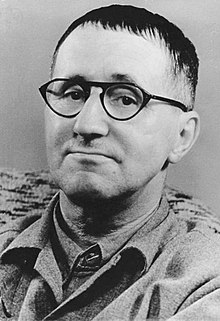 As we shift into term two we change the practitioner which we centre our study and practice around.
We pair the practitioner to the work we do and Brecht matches with Political Theatre very nicely. Bertolt Brecht is a German playwright, poet, director and theatre practitioner. He was born in 1898; he had a middle class upbringing though he sometimes claimed peasant origins. He lived through very radical and scary times (2 world wars, a Russian revolution, the rise of Hollywood etc.). He served as a medical orderly in WW I and was appalled by the atrocities which would influence his later work. Bertolt rejected the ideas of "naturalistic" theatre and decided to find his own methodologies in "Epic Theatre". This kind of theatre disallowed audiences to create an emotional connection with the characters and stories that were being presented; rather it was intended to spark a critical view of the action, analysing the issues and re-evaluating ones own values. Brecht was inspired by many things including; Karl Marx, Chinese Theatre but mostly Political injustice. I feel as if he lived in a time where theatre had become so immersive and "real" that it took the true power away of the art form and he wanted to give the stage it's voice back; and make the audience truly listen. Which lead him to develop -
The "verfremdungseffekt"
This is an alienation technique also known as "strange making" or defamiliarization. It's main goal was to make the audience realise that they are watching a play; to make them snap awake, just when they got comfortable. Brecht believed that in order to truly communicate a message the audience must realise that these are actors; and can no longer be completely lost in the narrative. They can no longer have the illusion of being the unseen spectator. The fourth wall does not exist in Brechtian Theatre; an actor can simply come out of character and talk directly to an member of the audience. I feel like this has the possibility to enhance a piece as the audience are apart of it and will definitely be paying attention if they know there's a chance they can get picked on. Another element of the "V" effect is the use of comedy. If you can make an audience laugh, you can make them cry. It's a really great way of manipulating an audience into reviewing their own morals as you make them realise what they find funny and how dark their psyches really are. However this should be used in effective small doses in order to highlight moments. If it was used for the majority of a play no one would buy it; it would become stupid and would lose all meaning.
Object and attitude exercise
To get us into the style of Brecht theatre we started by walking round the space and pairing a normal object and an attitude and emotion. The first one was a "sexy washing machine". We had to get into a group of 4 and create this contraption. We made sure to make it over the top and crazy; once we matched it with sound and movement it was quite comedic and definitely absurd. The list included a sick toilet, proud chair, depressed sandwich and an angry motorbike. The angry motorbike led into a short improvisation that utilized the "V" effect. In my scene the angry motorbike was paired with an oblivious old lady. I feel as if the contrast created conflict and comedy within the piece and made the audience question the relationship between object and owner. This could be used in a political piece to satirize objectivity materialism and capitalism. There were moments in other pieces such as the actor coming out of role and saying something along the lines of "why won't you start you're not even a motorbike". This really applied the "V" effect as it took you out of this crazy world where a motorbike can talk and also have emotions. I find this exercise useful as it helped me to see how effective this alienation technique can be. A difficult part of this exercise is not over playing the comedy of the situation; I found myself especially only doing things to make the audience laugh which meant I was less focused on the relationship I was creating on stage.
Exaggerated gesture exercise
 We were split into two sides and given a simple gesture. My side was given "I dunno" and the other had "stop". We just had to step out and do this gesture and step back in. Simple. We then had to exaggerate it by imagining we had strings on our arms and legs pulling us into the space then do the gesture. It then became a weird and far more interesting gesture. We then gave it a phrase; mine was "Well I didn't make the toast!". The intention became a better, well communicated movement that would be far more entertaining to an audience. The gestures did actually have depth and were very watchable; almost caricatured, clownish but very watchable. Brecht though naturalism was catharsis. It made the audience feel the emotions but ultimately would absolve them and they'd feel better after a good cry. By using exaggerated action and gesture Brecht managed to draw audiences in and keep their attention without losing them to the narrative.
Brechtian Characterisation
For an array of reasons Brecht didn't have big casts and the actors in these kinds of productions didn't have time for deep psychological Stanislavsky style character creations. Subtly and nuance needed to be thrown out of the window. People went from playing "The mother" to the "The post-man" to "The War-lord". All these characters needed to be noticeably different in order for the changes to read in on stage. The first thing you do is find neutral so you have a nice blank canvas to work with. The first character we created was:
As we shift into term two we change the practitioner which we centre our study and practice around. We pair the practitioner to the work we do and Brecht matches with Political Theatre very nicely. Bertolt Brecht is a German playwright, poet, director and theatre practitioner. He was born in 1898; he had a middle class upbringing though he sometimes claimed peasant origins. He lived through very radical and scary times (2 world wars, a Russian revolution, the rise of Hollywood etc.). He served as a medical orderly in WW I and was appalled by the atrocities which would influence his later work. Bertolt rejected the ideas of "naturalistic" theatre and decided to find his own methodologies in "Epic Theatre". This kind of theatre disallowed audiences to create an emotional connection with the characters and stories that were being presented; rather it was intended to spark a critical view of the action, analysing the issues and re-evaluating ones own values. Brecht was inspired by many things including; Karl Marx, Chinese Theatre but mostly Political injustice. I feel as if he lived in a time where theatre had become so immersive and "real" that it took the true power away of the art form and he wanted to give the stage it's voice back; and make the audience truly listen. Which lead him to develop -
The "verfremdungseffekt"
This is an alienation technique also known as "strange making" or defamiliarization. It's main goal was to make the audience realise that they are watching a play; to make them snap awake, just when they got comfortable. Brecht believed that in order to truly communicate a message the audience must realise that these are actors; and can no longer be completely lost in the narrative. They can no longer have the illusion of being the unseen spectator. The fourth wall does not exist in Brechtian Theatre; an actor can simply come out of character and talk directly to an member of the audience. I feel like this has the possibility to enhance a piece as the audience are apart of it and will definitely be paying attention if they know there's a chance they can get picked on. Another element of the "V" effect is the use of comedy. If you can make an audience laugh, you can make them cry. It's a really great way of manipulating an audience into reviewing their own morals as you make them realise what they find funny and how dark their psyches really are. However this should be used in effective small doses in order to highlight moments. If it was used for the majority of a play no one would buy it; it would become stupid and would lose all meaning.
Object and attitude exercise
To get us into the style of Brecht theatre we started by walking round the space and pairing a normal object and an attitude and emotion. The first one was a "sexy washing machine". We had to get into a group of 4 and create this contraption. We made sure to make it over the top and crazy; once we matched it with sound and movement it was quite comedic and definitely absurd. The list included a sick toilet, proud chair, depressed sandwich and an angry motorbike. The angry motorbike led into a short improvisation that utilized the "V" effect. In my scene the angry motorbike was paired with an oblivious old lady. I feel as if the contrast created conflict and comedy within the piece and made the audience question the relationship between object and owner. This could be used in a political piece to satirize objectivity materialism and capitalism. There were moments in other pieces such as the actor coming out of role and saying something along the lines of "why won't you start you're not even a motorbike". This really applied the "V" effect as it took you out of this crazy world where a motorbike can talk and also have emotions. I find this exercise useful as it helped me to see how effective this alienation technique can be. A difficult part of this exercise is not over playing the comedy of the situation; I found myself especially only doing things to make the audience laugh which meant I was less focused on the relationship I was creating on stage.
Exaggerated gesture exercise
 We were split into two sides and given a simple gesture. My side was given "I dunno" and the other had "stop". We just had to step out and do this gesture and step back in. Simple. We then had to exaggerate it by imagining we had strings on our arms and legs pulling us into the space then do the gesture. It then became a weird and far more interesting gesture. We then gave it a phrase; mine was "Well I didn't make the toast!". The intention became a better, well communicated movement that would be far more entertaining to an audience. The gestures did actually have depth and were very watchable; almost caricatured, clownish but very watchable. Brecht though naturalism was catharsis. It made the audience feel the emotions but ultimately would absolve them and they'd feel better after a good cry. By using exaggerated action and gesture Brecht managed to draw audiences in and keep their attention without losing them to the narrative.
Brechtian Characterisation
For an array of reasons Brecht didn't have big casts and the actors in these kinds of productions didn't have time for deep psychological Stanislavsky style character creations. Subtly and nuance needed to be thrown out of the window. People went from playing "The mother" to the "The post-man" to "The War-lord". All these characters needed to be noticeably different in order for the changes to read in on stage. The first thing you do is find neutral so you have a nice blank canvas to work with. The first character we created was:
- Old man/Old woman - String on nose and bum and then pull them in the different directions, bent knees and chest down. You walk with a shuffle and the add a character voice. For the Old woman you take a "Deutschmark" and stick it where the sun don't shine and hold it there (clench the buttocks). You turn the knees out and add another character voice. Through a hot seating we discovered that these characters read as working class people who led hard working lives.
- Champagne/Special brew drunk - Bent knees, Chin to chest, clench buttocks and hold a champagne class in right hand. The character comes from the object you are holding. So in my minds eyes I pictured a top hat, coat and tails and very posh character appeared. Special brew drunk was the same accept you stick your belly out more and change the object in your hand.
- Pregnant woman - Bent knees, stomach out hands behind lower back, character voice, deep breaths, groans; stereotypes help the character to read on stage.
- Capitalist - Hips out hand on belly and cigar in one hand, similar to champagne drunk, upper class, fat cat pair it with some satirical commentary.

Improvisation: We made all these characters meet in a simple setting (a park) and explored how they all interacted with each other after hearing the news that war has broken out. I found this task hard as with so many strong characters most of the scenes almost always erupted into a cacophony of shouting whilst everyone attempting to input ideas. Some good moments came out of these scenes however. In one scene we saw the characters completely disregard the concept war to focus on their own trivial everyday matters. In another one we got insights into a social commentary about what happens to babies during war times with the reaction of the pregnant woman. These scenes helped us to figure out even through farce and chaos strong obvious characters can deliver important points about society within a piece.
Sources:
http://www.bbc.co.uk/education/guides/zwmvd2p/revision
http://www.gradesaver.com/author/bertolt-brecht
https://en.wikipedia.org/wiki/Bertolt_Brecht
Sources:
http://www.bbc.co.uk/education/guides/zwmvd2p/revision
http://www.gradesaver.com/author/bertolt-brecht
https://en.wikipedia.org/wiki/Bertolt_Brecht
Subscribe to:
Posts (Atom)